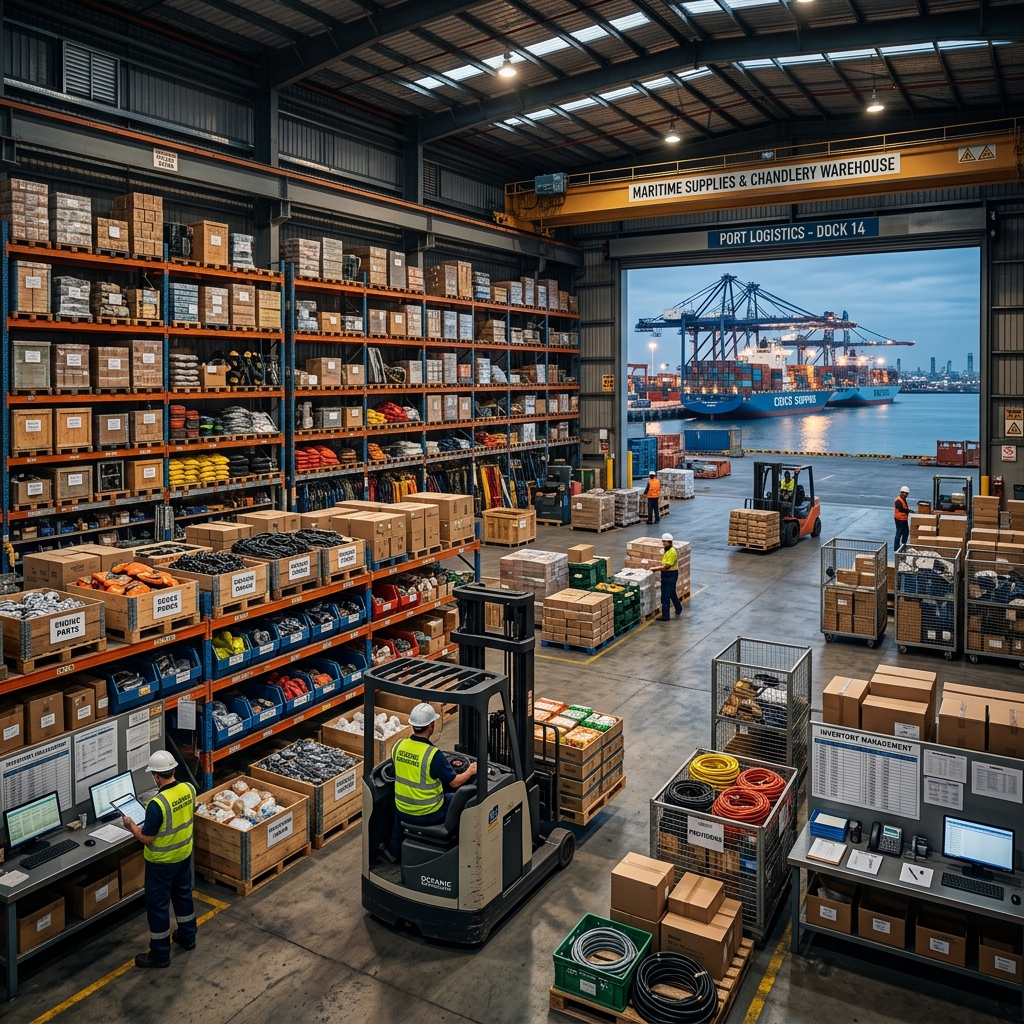
Warehousing Strategies for Ship Chandlers

A ship chandler's warehouse is a different operational animal from a general consumer warehouse. The product mix is diverse - chilled meat next to engine spares next to sealed bonded liquor. The volumes are unpredictable - a quiet week followed by a week with seven vessel calls. The dispatch pace is rapid - most orders move from receipt to dispatch within 4-12 hours. The compliance overlay - HACCP for provisions, customs bond for bonded goods, IMDG segregation for hazardous materials - sits on top of all of it.

For a working chandler at Chennai Port, the warehouse is not just storage; it is the operational engine. Here are the strategy levers that determine whether the engine runs well.

Zoning the warehouse by category

The first design principle is functional zoning. A working chandler's warehouse typically segregates: chilled and frozen provisions in dedicated cold rooms; dry provisions in ambient storage; bonded stores in a separate customs-controlled area; deck and engine stores in a hardware section; chemicals in a ventilated chemical store with appropriate segregation; safety equipment in a dedicated area.

This is not just neatness; it is regulatory necessity. Mixing categories - bonded goods in general storage, chemicals next to provisions - creates compliance failures and contamination risks. The zoning is checked at audit and at customs inspection.

Cold chain infrastructure

Frozen storage at -18 to -25 degrees Celsius. Chilled storage at 0 to +4 degrees Celsius. Each requires dedicated refrigeration with redundant capacity, continuous temperature monitoring, alarms for excursions, and backup power. A power outage that takes down the cold chain for an hour can compromise tonnes of inventory.

The investment is meaningful but the alternative - losing a major fresh provisions order to spoilage during an outage - is significantly worse. Chennai's grid is generally reliable but not perfect; backup generation for cold storage is operational baseline rather than nice-to-have.

Inventory turn versus stock depth

The strategic tension in any chandler warehouse is inventory turn (how fast stock moves) versus stock depth (how much buffer to carry against urgent demand). A high-turn, low-depth strategy minimises holding cost but exposes you to stockouts when an unusual order hits. A high-depth strategy buffers against demand spikes but ties up capital and risks expiry on perishables.

The right answer is category-specific. Routine consumables that move predictably can run on lean stock with regular replenishment. Items that experience demand spikes - urgent spares, common emergency provisions, frequently-substituted items - benefit from deeper buffer. The data discipline to know which is which is what separates well-managed inventory from cargo-cult stocking.

Bonded warehouse operations

The bonded section operates under customs licence with separate access control, separate stock records, and separate physical security. Stock movements in and out are recorded against customs declarations. Periodic stock takes are audited by customs officers. The bonded section is essentially a customs-supervised facility within the larger warehouse.

This adds operational complexity but enables the chandler to supply duty-free bonded stores - a category that generates meaningful margin and that vessel operators expect from a full-service supplier.

Picking and dispatch flow

The flow from order receipt to truck loading is where the warehouse efficiency shows up. Modern chandler warehouses use barcode-based pick lists, scan verification at picking, consolidation staging by vessel, and verified loading. The flow handles the diversity of items - chilled, ambient, bonded, hardware - without crossing the streams.

The discipline matters because a wrong-picked item discovered at the vessel handover is much harder to recover than one caught at warehouse dispatch. The cost of pick-error rework is one of the under-recognised drivers of warehouse profitability.

Receiving discipline

Inbound deliveries from suppliers are the first quality gate. Receiving discipline includes: inspection against the purchase order, temperature check on cold chain, packaging condition assessment, sampling per protocol, immediate quarantine on discrepancy. Skipping receiving discipline means defects propagate through the warehouse and out to vessels.

Location and access

For Chennai chandlers, warehouse location matters operationally. A warehouse in Saidapet or Periyapet can reach Chennai Port gate in 30-45 minutes through normal traffic, faster in off-peak windows. A warehouse further out adds round-trip time to every delivery. For 24/7 operations, traffic-resilient routing matters as much as raw distance.

A working warehouse is the foundation that everything else in the chandler operation depends on. Get it right and the rest of the operation runs smoothly. Get it wrong and every delivery becomes a struggle.

For warehouse-backed reliable supply at Chennai Port, see our ship chandler at Chennai Port service overview.

← Back to News