The Evolution of Provisions Sourcing

Forty years ago, ship provisions in Indian ports were bought off the dockside markets at dawn and loaded the same morning. The sourcing trail was a handshake, the quality control was the chandler's eye, and the expiry date was whenever the product started looking unappealing. It worked, in its way, for the ships and crews of that era. It does not work for modern shipping.

The shift has not been linear or evenly distributed. Some chandlers still operate much closer to the old model than the new one. But for fleet operators supplying long-voyage vessels at Chennai Port, the expectations have been transformed in three specific ways.

Traceability became mandatory

Major shipping lines today expect full traceability on fresh, frozen, and dry provisions. That means: the supplier name, the batch number, the production date, the best-before date, and - for fresh items - the harvest or slaughter date. This is not a theoretical requirement. It is the data a vessel's cook or chief steward logs in the ship's provisioning system and that port-state inspectors periodically spot-check.

From the chandler's side, this means the sourcing relationship has moved upstream. We do not buy from a market stall; we buy from licensed, auditable suppliers who can provide batch-level documentation on demand. It limits sourcing flexibility - sometimes the price is worse - but it is the only way to deliver provisions that will hold up under audit.

Dietary specifications got more detailed

A vessel in 2026 is a more dietary-diverse place than a vessel in 1996. Crews increasingly carry halal, kosher, vegetarian, and allergen-restricted requirements that need to be provisioned separately. A fleet of 25 ships operating a mixed-nationality crew may have six or seven different dietary profiles across its rotation. The chandler's provisioning list is correspondingly longer and more specific.

Halal certification, in particular, has become a standard ask for vessels with GCC-region crew rotations. The certification needs to be on the packaging, from a recognised certifying body, and matched on the delivery note.

Cold chain integrity moved from courtesy to contract

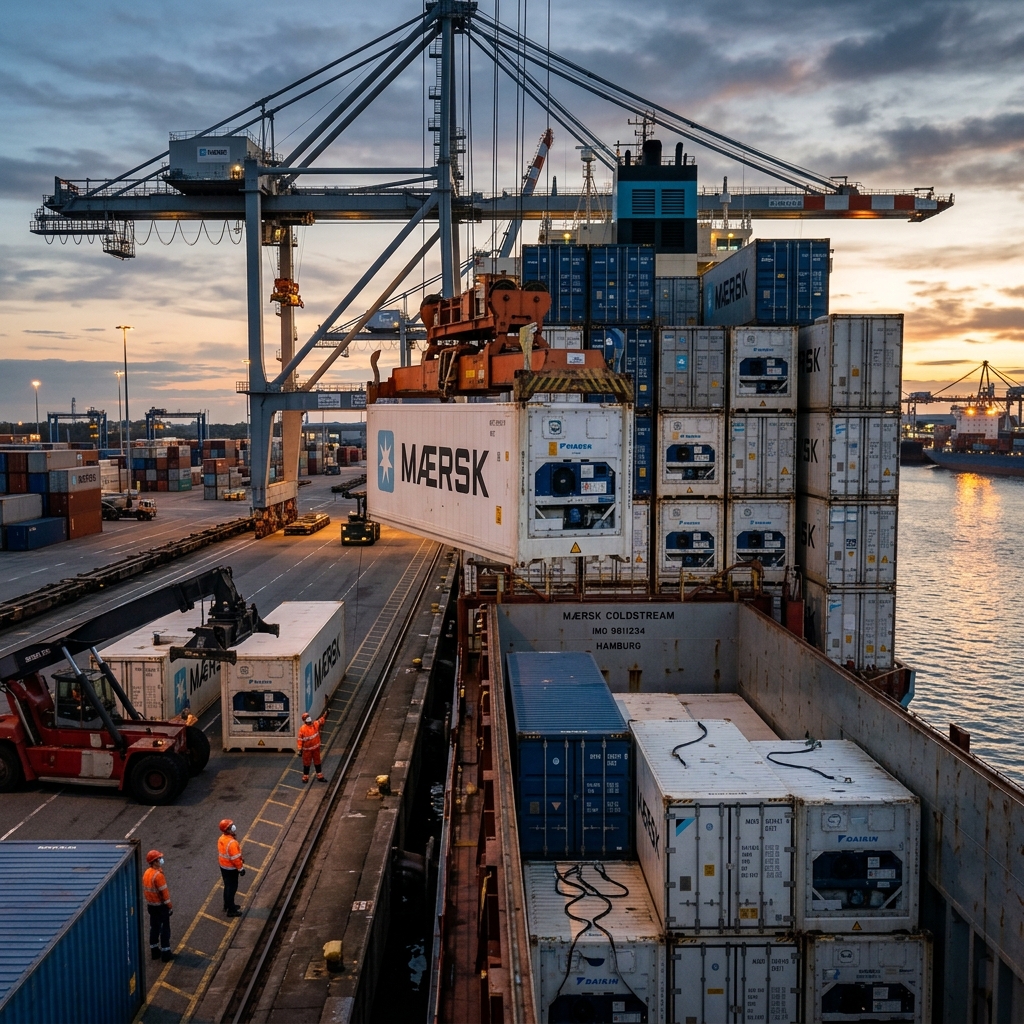
Temperature logging from source to delivery, once a premium service, is now a baseline expectation. Most fleet contracts specify the maximum temperature excursion permitted at any point, and the documentation the chandler must provide at handover. A chandler supplying without a documented cold chain has effectively closed themselves out of the modern shipping line market, whatever else they offer.

Chennai's ambient temperature - frequently above 35 degrees Celsius for six months of the year - makes this a genuinely challenging discipline rather than a box-tick exercise. Reefer vehicles, insulated staging, minimal dockside exposure, and live temperature logging are the operational stack that makes it work.

What has not changed

The core skill - knowing what a 20-day voyage crew actually needs and in what quantities - has not changed. Getting the provision volumes right, managing substitutions when a specific item is unavailable, and working with the ship's cook to match menus to ports is still a relationship-intensive exercise. No e-catalog substitutes for a sourcing team that has provisioned the same vessel repeatedly and knows its kitchen.

That is the interesting point about this evolution. The framework has become more formal and more documented, but the underlying skill remains human. A chandler who has only the framework is a bureaucrat. A chandler who has only the relationship but not the framework is a throwback. The chandlers who do well in 2026 combine both.

Looking forward

The next wave, already visible, is sustainability documentation. Carbon footprint per delivered tonne of provisions. Local-sourcing declarations. Plastic packaging reduction. Some of this will land as contract requirements over the next 3-5 years. Chandlers who are already measuring these factors will find the transition routine. Others will find themselves quickly out of scope on major fleet contracts.

For traceable, HACCP-compliant provisions supply at Chennai Port, see our ship chandler at Chennai Port provisions overview.

← Back to News