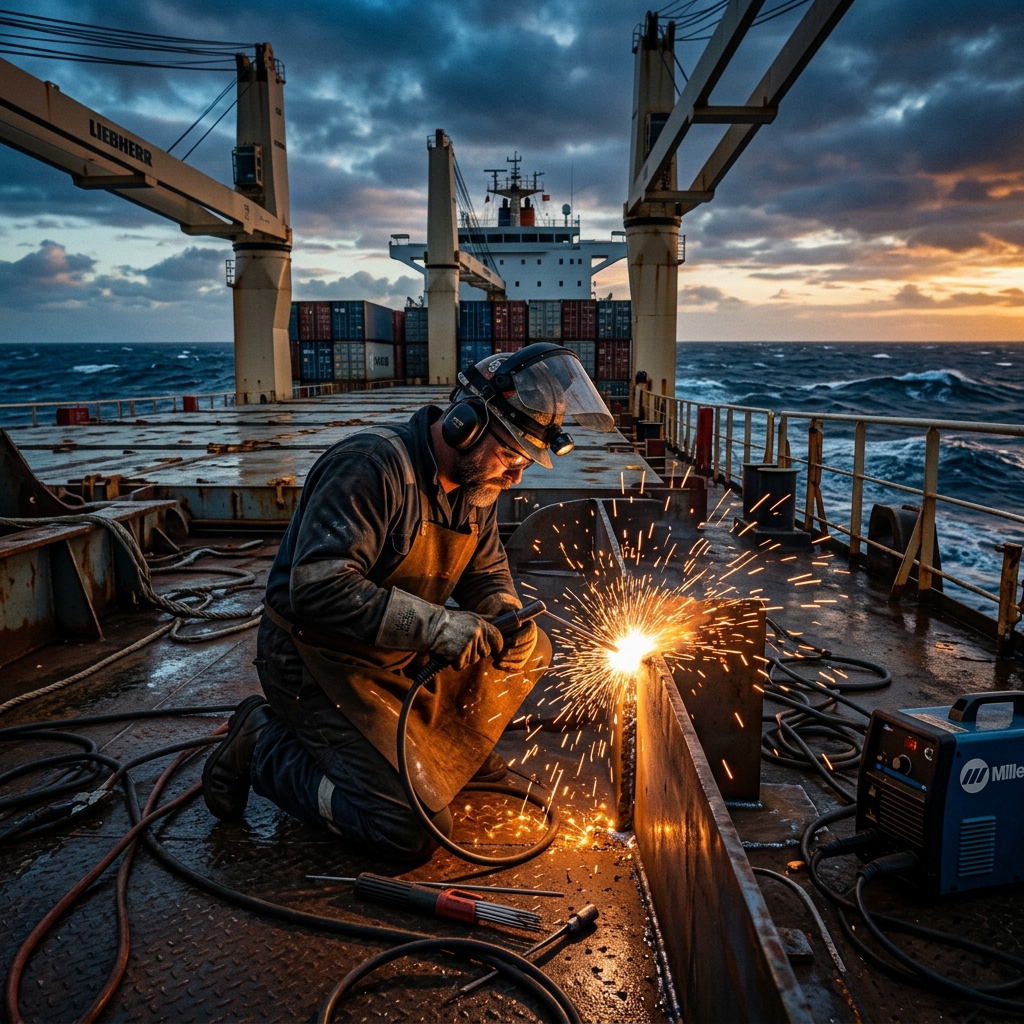
Marine firefighting equipment is one of the most regulated supply categories on a vessel. Every item - from the smallest extinguisher to the EEBD cartridge - has approval marks, service dates, refill traceability, and class society or flag state acceptance criteria. Asia, particularly the China-Korea-Singapore corridor, is now the dominant manufacturing footprint for most marine firefighting equipment in the global fleet. For chandlers in India sourcing for vessels at Chennai Port, the supply chain runs primarily through this region.
That sourcing footprint creates both opportunity and risk. Done well, you get fully-approved equipment at competitive cost with reliable delivery timing. Done badly, you get equipment with paperwork that does not survive an inspection. Here is the practical landscape.
Approval marks: the first verification
Marine firefighting equipment requires approval from at least one major class society - DNV, ABS, Lloyd's Register, ClassNK - and must conform to either SOLAS-aligned standards or specific flag-state requirements. The approval is not a manufacturer's claim; it is a third-party stamp on the product itself. When sourcing from any Asian supplier, the first check is the approval mark visible on the equipment, matched to the manufacturer's certificate, matched to the class society's published list of approved manufacturers.
If any link in this chain breaks - the certificate references a manufacturer name that is not on the class society's list, the approval mark is on the box but not the product, the test certificate has the wrong issue date - the equipment should be treated as unverified until the discrepancy is explained.
Counterfeit equipment is a real problem
The marine firefighting market in Asia includes a small but persistent counterfeit segment. Counterfeit extinguishers, fake refill cartridges, and falsified test certificates have all surfaced in the last decade. The volume is small relative to the legitimate market but the consequences are serious - failed equipment in a shipboard fire is not theoretical risk. The safeguards: source only from suppliers with direct manufacturer relationships, refuse equipment without traceable certificates, cross-verify approval numbers against published lists, and treat unfamiliar brands with appropriate scepticism.
Service date discipline
Most marine firefighting equipment is service-dated - extinguishers need pressure tests, EEBDs need cartridge replacement, fire hoses need pressure testing, breathing apparatus cylinders need hydro-testing. The service is performed by approved service centres against documented procedures and recorded on a service tag. New equipment supplied from Asian factories should arrive with a long service interval ahead. Equipment that has been sitting in a warehouse for two years before reaching the vessel may have its service interval already partly consumed - which the chandler should disclose, not hide.
Specifying the right equipment for the vessel
Different vessel types require different firefighting capabilities. A tanker has higher specification requirements for foam systems, vapour-suppressant equipment, and intrinsically-safe portable equipment. A bulk carrier's firefighting requirements are substantial but generally less specialised. Container vessels carrying hazardous cargoes have specific requirements depending on the IMDG class of cargo carried. The vessel's safety construction certificate and approved fire-control plan define what should be on board; the chandler's role is to source against that spec, not to substitute for cost reasons.
Logistics and lead time
Most standard items - ABC dry powder extinguishers, foam extinguishers, fire blankets, common cartridges - are available off-the-shelf in Indian ports because they move in volume. More specialist items - certain breathing apparatus models, specific foam concentrate types, particular fixed-system spares - run on lead time of 2-6 weeks because they are sourced specifically against vessel requirement. Vessels planning a 5-year safety equipment refresh should communicate the specification well ahead.
The audit trail you will care about later
Five years from now, when a flag-state inspector asks where this extinguisher came from and to what spec, the answer should be in a folder, not in someone's memory. Every supply of firefighting equipment should generate a paper trail: source, approval, batch, service history, delivery date. This is a basic discipline; it is also the discipline that distinguishes serious chandlers from supplier-of-convenience operations.
For approved-source firefighting and safety equipment supply at Chennai Port, see our ship chandler at Chennai Port safety supply scope.