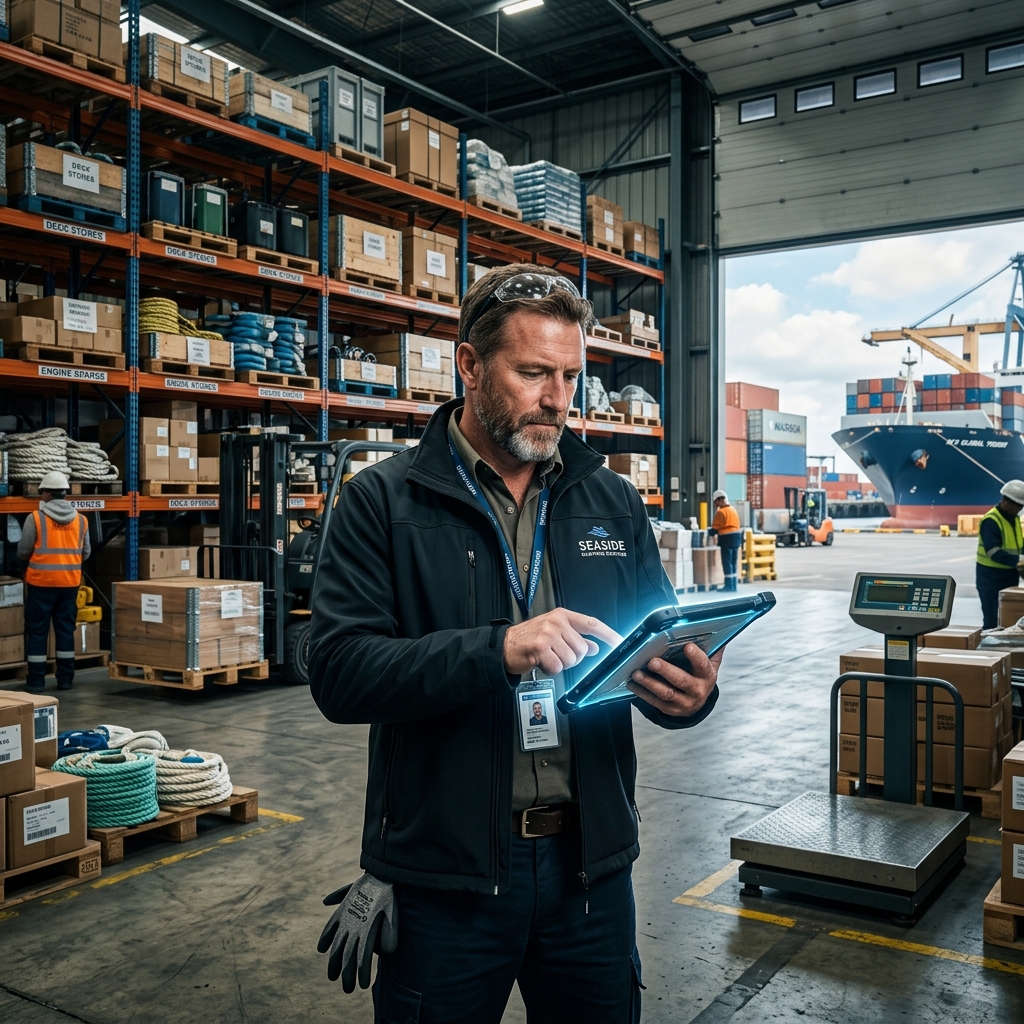
Every maritime conference for the last five years has featured a panel on digitalisation. Most of the discussion is about the same half-dozen topics - blockchain bills of lading, AI-driven route optimisation, autonomous vessels - and very little of it is actually affecting what happens when a vessel requests provisions at Chennai Port on a Thursday evening. The real digitalisation of ship chandling is happening in quieter, less glamorous places.
Here is what has actually changed in our operations in the last three years and what has not.
E-catalogs replaced the printed guide
Five years ago, a vessel's chief steward typed requisitions from a printed catalog, emailed a PDF, and waited. Now most well-run vessels use an e-catalog plugged into the ship's procurement system, which exports a structured file - usually an IMPA-coded spreadsheet or a purpose-built XML format - directly to the chandler. The item numbers are unambiguous, the quantities are validated, and the substitution rules are pre-set. On the chandler's side, this drops quote-generation time from 90 minutes to about 15 minutes for a standard stores order.
The caveat: only some shipping lines have actually rolled this out across their fleet. A 20-year-old bulk carrier with a one-person galley team will still send a handwritten scan. We serve both.
API procurement platforms
SHIPSERV, ShipServ's direct API connections, ShipSupply.net and similar platforms let shipping companies route requisitions to pre-approved chandlers and receive structured quotes back. These platforms are useful - they standardise the format and provide an audit trail - but they do not eliminate the need for the chandler to actually source the items. They are a communication layer, not a supply layer. A chandler with great API integration and poor physical supply chain will still miss deliveries.
Digital gate passes at Indian ports
This is a specific Indian-ports change. Chennai Port, Kamarajar, and several others have moved from paper gate passes to digital systems in the last 24 months. The practical impact: paperwork that used to take 40 minutes at the gate now takes around 10 if all data is pre-filed and under 2 minutes if it is part of a standing pass. Combined with e-customs declarations, this is the single biggest operational time saving we have seen from digitalisation. It is unglamorous and it works.
Real-time tracking and visibility
Most of our delivery vehicles now run GPS trackers accessible to the client via a web link. Vessel agents can see the truck leave the warehouse, watch it arrive at the port gate, and track it to the gangway. This does not make the delivery faster, but it replaces the "where is my supply?" phone call with a visible status. For a busy port agent managing four vessels simultaneously, that alone is worth the setup.
What has not changed
Physical handling has not changed. Someone still has to load the provisions into a truck, drive to the port, pass through security, meet the vessel, and get the pallets on deck. No amount of blockchain changes that. The weather has not changed. Port congestion has not changed. The calendar of customs officers has not changed.
The honest summary: digital tools have compressed the quote-to-confirmation window from days to hours, tightened the paperwork loop, and made status visibility better. What they have not done is change the physical reality of marine supply. The chandlers who overinvest in digital front-ends without fixing physical sourcing end up with a slick portal and a bad delivery record. The best operators match digital speed with physical discipline - and treat digitalisation as a tool, not a strategy.
For a chandler that pairs digital requisition handling with proven physical supply, see our ship chandler at Chennai Port operations overview.